To prepare competent psychologists who would excel in knowledge, orientation and practice of psychology, with high ethical standards and social relevance.
Good sleep habits or good sleep hygiene, are mostly common sense. But life is very busy and we often don’t think about them.
Having a good night’s sleep is important for maintaining good health. The body needs the opportunity to recharge from the day’s activities. Experiencing difficulty sleeping, however, is a common problem. Lack of sleep can lead to: • Irritability • Lack of energy • Poor concentration. Good quality sleep isn’t necessarily a long sleep – it’s having what doctors call ‘deep sleep’ and ‘dream sleep’. Most ‘deep sleep’ occurs during the first five hours after falling asleep. Even if you sleep for only four or five hours, you can still get about the same amount of ‘deep sleep’ as someone who sleeps for eight to ten hours. Illness or pain can disrupt sleep. Depression, particularly, can lead to: • Difficulty in getting to sleep • Poor quality sleep • Less sleep • Frequently waking during the night • Waking very early in the morning and being unable to get back to sleep. Poor quality ‘deep sleep’ can lead to: • Tiredness during the day • Poor concentration • Irritability • Aches and pains in the muscles and bones • An immune system that doesn’t work well, leading to more frequent illness • Longer periods of depression. Our ability to get good quality sleep can be disrupted by physical illness, infections, pain during the night and psychological stress. Depression disrupts your sleep patterns and as you recover, your sleep will improve. It is also helpful to work towards restoring a regular sleep pattern as this will help you make a full recovery. The sleep-wake cycle and you Think back over the last two weeks. Have you: • Felt tired all the time? • Spent more time in bed than usual? • Had poor quality or fewer hours of sleep? • Napped during the day? • Cut down on physical activities? If you’ve answered YES to one or more of these questions, the information that follows can help you get the sleep you need.
Value your bedtime and have the same getting up time during the working week, regardless of sleep. The body has an internal clock and hormones that control sleepiness and wakefulness. This clock works best if there is a regular sleep routine. When you feel sleepy at bedtime, try not to ignore this by staying up, as this is a window of opportunity for sleep. Going to bed too early can also disturb your sleep. In the hour before going to bed, it is important to have a relaxing sleep routine to allow you to wind down. This may include any form of “time out” compared with your day e.g. a warm bath, reading quietly or a warm milk drink. Falling asleep on the couch during the evening reduces your sleep drive and makes it harder to fall asleep when you go to bed. Tips for improving your sleep There are a number of things you can do to improve your sleep. When you wake up in the morning • Get out of bed as soon as you wake. Don’t go back to sleep or try to make up for ‘lost sleep’. • Try to get up at about the same time each morning, perhaps around 7am to 7.30am. • Go outside into the fresh air. • Do some physical activity, for example, go for a walk. During the day • Do not nap. If you nap, you’ll be less tired when you go to bed and you’ll probably take longer to fall asleep. • If you’re worrying about things during the night, set aside some time for problem-solving during the day. Identify problems that are causing you stress and solve them using • Keep a sleep-wake diary. • During the day, try to be physically active. • Avoid drinking caffeine after 4pm and try not to drink more than two cups of caffeine-type drinks each day eg. coffee, strong tea, cola or energy drinks.
Before going to bed • Avoid going to bed too early. It isn’t the right time for ‘deep sleep’. • Go to bed at around 10pm to 10:30pm. • Avoid using alcohol to help you sleep. As the alcohol is broken down in your body, it causes you to sleep less deeply and to wake more frequently. • Don’t smoke within an hour or two of going to bed.
Smoking stimulates your nervous system. • Don’t go to bed hungry or with a full bladder. • Regular exercise can improve your sleep, but avoid vigorous exercise late in the evening. • Allow yourself time to wind down before going to bed. If you are working or studying, stop at least 30 minutes before bedtime and do something relaxing. • Use your bed only for sleep and sex so that you learn to associate your bed with sleep. • Avoid taking sleeping pills. If you do need to take sleeping pills, try not to take them for longer than a week because they can be addictive.
While you sleep • Try to make your bedroom quiet, dim and cool. • Avoid too many blankets and electric blankets. If you’re too hot, you won’t go into ‘deep sleep’.
Overcoming long-term sleeping problems For some people, sleeping problems may last for weeks, months or even years. Not surprisingly this may lead to anxiety about getting to sleep, which in turn makes the problem even worse. It can be helpful to take specific steps to break the cycle of feeling anxious and restless in bed. Below are some steps to follow when you can’t get to sleep.
Get up if you can’t sleep after trying for 15 to 20 minutes. Staying in bed when you’re feeling restless and anxious is unlikely to result in sleep.
Do something quiet and distracting, for example play cards, read, knit or enjoy a warm bath. If your mind is very active or you can’t stop worrying, it may be helpful to concentrate on something else, such as doing a crossword or watching television. By distracting yourself from your worries, you may find it easier to wind down and become sleepy.
Go back to bed when you feel more relaxed and sleepy.
If you’re still awake after a further 15 to 20 minutes, get out of bed again. Repeat this process until you fall asleep shortly after returning to bed.
Gratitude is not only the greatest of virtues, but the parent of all other
Gratitude is derived from the Latin concept gratia, which entails some variant of grace, gratefulness, and graciousness. Gratitude emerges upon recognizing that one had obtained a positive outcome from another individual who behaved in a way that was a) costly to him or her b) valuable to the recipient c) intentionally rendered. As such, gratitude taps into the propensity to appreciate and savor everyday events and experiences.
Sharing is caring, Cultivate the habit of being grateful for every good thing that comes to you, and to give thanks continuously. And because all things have contributed to your advancement, you should include all things in your gratitude.” ― Ralph Waldo Emerson
There is a variety of things that can conjure positive feelings of appreciation, or gratitude. Gratitude begins with an inner feeling. When we’re grateful for the good things happening around us, especially when we’re with those we love, expressing it helps the feelings of love and tenderness to grow.
A deeply felt and fully expressed gratitude is an effective way to positively influence attitudes and behavior–our own and those of others.
Gratitude is an emotion similar to appreciation that most people are familiar with.
Most of us associate gratitude with saying “thank you” to someone who has helped us or given us a gift. From a scientific perspective, gratitude is not just an action. Gratitude is a positive emotion, which is really important because it serves a purpose. Expressing gratitude is the beginning of courtesy, generosity, concern, bring a calm sense of well-being,and deeper appreciation for positivity.
Definitions
A definition comes from the Harvard Medical School, which says that gratitude is:“a thankful appreciation for what an individual receives, whether tangible or intangible. With gratitude, people acknowledge the goodness in their lives … As a result, gratitude also helps people connect to something larger than themselves as individuals – whether to other people, nature, or a higher power”
Forster et al., 2017 defines:“an emotion that is typically evoked when one receives costly, unexpected, and intentionally rendered benefits, and is thought to play a key role in regulating the initiation and maintenance of social relationships”.
Emmons says that gratitude:“has been conceptualized as an emotion, a virtue, a moral sentiment, a motive, a coping response, a skill, and an attitude. It is all of these and more. Minimally, gratitude is an emotional response to a gift. It is the appreciation felt after one has been the beneficiary of an altruistic act” (Emmons & Crumpler, 2000).
Gratitude is a positive emotion that is felt after being the beneficiary of some sort of gift. It is a social emotion that is often directed towards a person (the giver of a gift), though it is also often felt towards a higher power. Gratitude is often felt when a gift is not necessarily deserved, or when the gift was not given in some sort of reciprocal sense. The social aspect of gratitude should be clear from these definitions.
According to Dr. Robert Emmons, the feeling of gratitude involves two stages (2003):
First comes the acknowledgment of goodness in one’s life. In a state of gratitude, we say yes to life. We affirm that all in all, life is good, and has elements that make it not just worth living, but rich with texture and detail. The acknowledgment that we have received something gratifies us, both by its presence and by the effort the giver put into choosing it.
Second, gratitude is recognizing that some of the sources of this goodness lie outside the self. At this stage, the object of gratitude is other-directed; one can be grateful to other people, to animals, and to the world, but not to oneself. At this stage, we recognize not only the goodness in our lives, but who is to thank for it, and who has made sacrifices so that we could be happy.
The two stages of gratitude comprise the recognition first of the goodness in our lives, and then of the source of that goodness that lies outside of ourselves. By this process, we recognize everything and everyone that makes us who we are in our best moments.
Purpose of Gratitude
People can use gratitude to form new social relations, or to build upon and make current ones better.
Acts of gratitude can be used to apologize, make amends or help solve other problems people may face.
Alternatively, people may feel gracious because it can be an intrinsically rewarding process. Simply being grateful for being alive is a great way to motivate oneself to seize the day. The idea that tomorrow is not guaranteed is a strong motivator to some people.
Why Gratitude Works
Gratitude is a selfless act. Gratitude acts are done unconditionally to show to people that they are appreciated, not because people are looking for something in return; however, that is not to say that people do not return the favor. Gratitude can be contagious, in a good way.
Catharsis-
One concept that fits well into the blueprint of gratitude is catharsis.
Catharsis is the process in which an individual releases strong emotions. For example, after a stressful or traumatic event, crying provides a means for such a strong release; thus, rendering the activity cathartic.
It is in a similar fashion that catharsis works with gratitude. To illustrate this, consider the following. The guilt associated with failing to meet obligations may cause a person to show gratitude to another whom they have let down, in an attempt to release that guilt. The acts following that event are meant to show the deep appreciation that the friends have for each other.
Additionally, in a more solitary way, possessions left from passed loved ones may provide a sense of serenity that enables the new owner to reflect with gratitude on that object. The use of gratitude serves as an agent of catharsis, and both parties feel satisfied in the end. Which is a pretty good seguing into the other reason that gratitude works.
Reciprocity-
Second Reciprocity, a concept that originated from social psychology, is about the exchanging of actions.
In regard to gratitude, it is the exchange of positive emotion. Someone performs an act of gratitude for another person, and in turn, that person may be motivated to do something gracious for the former person, or continue the favor for a stranger.
After all, acts of gratitude aren’t only for people that you know! A common contemporary phrase that people are familiar with is, “paying it forward.”
Though, paying it forward does not obligate you to reciprocate if you cannot, but it does spread positivity via gratitude.
Article 1 summaryIs Gratitude a Moral Affect?
Authors establish gratitude as a moral affect . “We are…proposing … that gratitude typically results from and stimulates moral behavior, that is, behavior that is motivated out of concern for another person… We liken gratitude to other moral affects such as empathy, sympathy, guilt, and shame.” This proposal is supported with the four following hypotheses:
Gratitude is used as a moral barometer, in that it is used to emotionally feel the size and nature of a gift from another. The supporting studies cited showed that people are more likely to feel gratitude towards: acts done by strangers than family members, larger acts than smaller acts, more inconvenient acts, acts that confer benefits which themselves are not necessary because of a situation caused by the benefactor, people with higher status, and people who were generally nicer. People were also significantly more likely to feel gratitude when their declaration of gratitude would be public.
Gratitude is used as a moral motive – that is, it encourages pro-social behavior, and discourages societaly disruptive behavior. Three studies cited showed that those who felt gratitude were more likely to help others.
Expressions of gratitude reinforce moral behavior. This is supported through multiple studies, all which show that expressions of gratitude encourage pro-social behavior in the future. For example, thanking case managers induced greater visitation, greater volunteerism, helping a stranger pick up dropped books, and spending more at a store.
The noted exception is that humans have a built in defense mechanism against overt attempts to use expressions of gratitude for greedy reasons (e.g. to get customers to spend more money). In addition, one referenced study showed that an expression of gratitude colors the recipients emotional valance of the benefactor and events sounding their interaction towards a more positive light.
Gratitude can be correlated with certain personality traits. This is proven only half true – only agreeableness is shown to be positively correlated with gratitude (and narcissism negatively correlated). Unexpectedly, extroversion, conscientiousness and neuroticism had nearly no correlation with gratitude.
Article 2 summary – A Little Appreciation Goes A Long Way; Why Gratitude Is The Gift That Keeps On Giving
Appreciation is one of life’s greatest motivators, so when we take the time to let people know that we value them, it inspires them to continue doing even more. That is precisely why gratitude is the ultimate gift that keeps on giving.
“A person who feels appreciated will always do more than what is expected.”
That’s not just a nice sounding quote, it is a fact that has been scientifically proven.
Francis Flynn, Professor of Organizational Behavior at Stanford, shared the following: “Individuals often withhold help because they are uncertain about whether beneficiaries will appreciate their assistance. Expressions of gratitude can signify that a beneficiary values, needs, and accepts one’s assistance.
Previous research has shown that grateful feelings enable people to savor positive experiences, cope with stress, and strengthen social relationships. A disposition toward gratitude is also associated with higher levels of subjective well-being, demonstrating that counting one’s blessings can increase positive emotions and health.”
In each of the four experiments designed to look at how being thanked played into feelings of personal competence and the perception of being valued. They tested having someone thank another person for their involvement, then studying the resulting behavior of the person who received the thanks. Each participant was measured on how effective they felt they were at the task as well as how valued they felt. The results were very telling:
“The findings suggest that when helpers are thanked for their efforts, the resulting sense of being socially valued is critical in encouraging them to provide more help in the future. Gratitude expressions spill over onto other beneficiaries as well, suggesting that one can spark a chain of prosocial behavior with a simple thank you. Overall, the research affirms our general intuition –– that giving thanks can have important implications for encouraging actions that promote cooperation. Clearly, a little appreciation goes a long way.”
There is no doubt that when we say the words “thank you” we make the other person feel important and valued, which raises their self-esteem and helps improve their self-image. In addition, saying “thank you” not only improves their self-esteem, it improves our own self-esteem as well. Each time we say those words to another person we feel better about ourselves, our attitude improves, and we become more grateful.
This phenomenon is often referred to as The Law of Reciprocity which says “If you make me feel good about myself, I will find a way to make you feel good about yourself.” That act of showing appreciation through something as simple as saying “thank you” ignites others to go the extra mile for us, and we in turn, become inspired to go the extra mile for them. Thus we see how gratitude truly is the gift that keeps on giving.
Article 3 summaryCounting Blessings Versus Burdens: An Experimental Investigation of Gratitude and Subjective Well-Being in Daily Life
Authors conducted three studies.
In the first study, subjects were asked to complete a weekly gratitude journal, weekly burdens journal, or a weekly neutral journal for nine weeks.
Gratitude Condition:-There are many things in our lives, both large and small, that we might be grateful about. Think back over the past week and write down on the lines below up to five things in your life that you are grateful or thankful for.
Burdens Condition:- Hassles are irritants—things that annoy or bother you. They occur in various domains of life, including relationships, work, school, housing, finances, health, and so forth. Think back over today and, on the lines below, list up to five hassles that occurred in your life.
Despite the extreme infrequency of the journaling, there were still significant results.The grateful group reported increased well-being, had better health, exercised more (~40 min./week), felt life was better (~8% better), and had increased optimism (~5% more).
In the second study, subjects were asked to complete a daily gratitude journal, daily burdens journal, or a downward social comparisons journal for two weeks. Gratitude & Burdens Condition same as in study 1 (except daily instead of weekly).
Downward Social Comparison Condition:- It is human nature to compare ourselves to others. We may be better off than others in some ways, and less fortunate than other people in other ways. Think about ways in which you are better off than others, things that you have that they don’t, and write these down in the spaces below.As expected, there was a stronger response due to the increased frequency of the journaling.
Perhaps because of the reduced duration (2 weeks vs 9), or perhaps because the first result was a fluke, there was no significant impact of the gratitude intervention on measured health variables (e.g. hours of exercise, sleep quality, asprin, caffeine, and alcohol usage). However, those in the gratitude group did report increased pro-social behavior (offering emotional support and help with a problem).
In the third study, all subjects chosen had a neuromuscular disease (as compared to the usual healthy college student). In addition, there were only two groups – a gratitude group with the same instructions as before, and a control group. The study was extended to three weeks, and and reports were collected from the subject’s closest relationship, to see if changes were observable to more than the subjects internal narrative.
The impact on well-being, optimism and social connectedness was similar to in studies 1 and 2. Similar to in study 2, there was no impact on measured health variables. However, there was one exception – subjects in the gratitude condition reported getting half an hour more sleep (7.58 hrs.) as compared to the control (7.06). These changes were noticed on the reports by the subject’s closest relationship.
Gratitude is a feeling with which we are all familiar. It is the feeling of appreciation to someone or something outside of ourselves for something in our lives that we find beneficial. Gratitude is prized as a virtue by most of the world’s religious traditions, and it has been a championed as a source of happiness and satisfaction by the popular press. Given the popular and religious views on the topic, is “an attitude of gratitude” one worth pursuing? This is the question that the Emmons and McCullough sought to answer when they conducted their series of studies.
Before they could answer their core question about gratitude, the authors had to lay some conceptual groundwork. The study of gratitude is situated in the subjective well-being literature. This literature studies the components of well-being (i.e. happiness) which include appraisals of how satisfied one is with one’s life as well as moods and emotions like joy, frustration, excitement and… gratitude.
Gratitude is highly related to other positive emotions like optimism, joy and harmony. It may seem different to us semantically, however, in order to treat it separately in a scientific study, it had to be shown that gratitude was separate from, for instance, a more general concept like “happiness”. Fortunately, there was previous work to show that although gratitude “overlaps” with other positive feelings, the beliefs and ideas associated with it are distinct (McCullough et al., “The grateful disposition: A conceptual and empirical topography”, 2002).
Having shown that gratitude was distinct from other positive emotions, the authors set out to show not only that gratitude was related to well-being but that it caused well-being. In order to show causality (rather than merely correlation), they needed to manipulate gratitude in an experiment. They did this in a series of studies in which participants were divided into conditions, one in which they were told to list things in their lives that they were grateful for (“listing blessings”) and one or more in which they listed “hassles”, did something unrelated or did nothing at all (a control condition that could be compared with gratitude).
In addition to this manipulation of gratitude, they also took measures of participants’ positive and negative emotions. If participants who received the gratitude manipulation experienced more positive and less negative emotions of the course of the study, then it would be safe to conclude that gratitude had caused these changes in their experience.
Article 4 summaryIs Gratitude an Alternative to Materialism?
Authors explore the connection between gratitude and materialism.
Materialism: “A persistent emphasis on lower-order needs for material comfort and physical safety over higher-order needs such as self expression and quality of life.”
Materialism has been shown to harm psychological well-being, and so is a losing strategy for the individual. However, materialism in others may be beneficial, as it encourages entrepreneurship and GDP growth, and encourages wealth and status signaling (e.g. in person you may not be able to tell that Warren Buffet is exceptionally rich, given his reputation for not being materialistic, but in front of most other rich people – they will make the effort to make sure you know that they are rich).
The authors then explore two development routes which give rise to the personality trait of materialism:
Insecurity. Those who have not had “their basic psychological needs met – needs such as safety, competence, connectedness, and autonomy” are more likely to be materialistic. Three examples in particular are those who have high self-doubt, those who come from poor families, and those whose who had parents which failed to provide requisite levels of emotional support.
Role models. Quite sadly, Americans are inundated with materialistic role models, every single day. From advertisements which highlight materialistic themes to celebrity culture which glorifies the rich and frivolous, to business culture in which we are told our dreams should be to be rich and powerful.
The evidence is clear – while economic motivation is a prerequisite for a stable life (e.g. the unemployed have higher rates of depression), high economic motivation (e.g. materialism) is strongly correlated with reduced well-being and increased rates of mental disorder.
The authors then make the case that gratitude and materialism are inversely related.
In one study, (McCullough 2002) those who had a high level of gratitude as a personality trait were much more likely to have below-average levels of materialism. Polak 2005 showed the same results.
Lerner and Ketlner (2000, 2001) show that gratitude focuses our attention on others (e.g. instead of believing we control our fate, we start looking at others as agents of change in our lives). Furthermore, gratitude shifts the color of that focus to the positive – not only are others effecting us, but they are doing so in a positive way. This in turn gives the impression that one is surrounded by benevolent agents, which itself destroys insecurity, which is one of the primary drivers behind materialism.
The last argument the authors bring up is that those who are more grateful are more social, and so not only perceive the environment to be more benevolent, but actually make it so by helping others more frequently and accumulating social capital.
Article 5 summaryThe Grateful Disposition: A Conceptual and Empirical Topography
Authors explored what emotional states and personality factors give rise to gratitude through four studies.
They first define four dimensions of gratitude: intensity, frequency, span, and density.
Intensity: The depth of the feeling, from a slight emotional tug to overflowing tears.
Frequency: The ease with which grateful feelings are elicited.
Span: The number of different things for which a person can be grateful for at the same time.
Density: The number of different people for which a person can be grateful for a single positive outcome.
In the first study, a wide range of personality factors were tested against the GQ-6, a measure of gratitude. In addition to information collected from each participant, information was collected from four informants who knew each subject well.
Measures of well-being had the strongest correlation with gratitude, oftentimes greater than .5 (as seen in the table to the right). Pro-social traits and measures of spirituality were also correlated with gratitude (~.15 to .30).
The personality trait of agreeableness had the strongest positive correlation with gratitude, of .39, while neuroticism had the strongest (and only) negative correlation, of -.30.
The second study measured similar factors and traits, but was different in two regards. First, it was much larger, with six times the sample size (n=1,228).
Second, rather than the usual college student, participants were adults, 80% female, and contacted through the web.
The results were similar to those of study 1, with the notable difference that most of the correlations were stronger (e.g. .32 for extroversion vs. .2 and .53 for spiritual transcendence vs. .24).
The third study was similar to the first one, except that materialism and envy were also measured (Belk Materialism Scale and Dispositional Envy Scale).
Materialism and envy had strong negative correlations with measures of gratitude.The materialism sub-scales had negative correlations ranging from -.07 to -.38, and the envy scale of -.39.
“Grateful people report themselves as being less materialist and less envious. In particular, grateful people report being more willing to part with their possessions, more generous with them, less envious of the material wealth of others, less committed to the idea that material wealth brings happiness. Apparently, material success is not a very important factor in the happiness of highly grateful people.”
The fourth study combined the data from the first three studies, and attempted to isolate individual correlations. For example, extroversion and agreeableness are both correlated with gratitude, but they are also both correlated with each other.
After controlling for agreeableness, the magnitude of nearly all correlations fell. Overall, the Big Five personality traits combined could account for 30%-50% of the overall variation in a person’s level of gratitude.
Here is a great model to follow for practicing the art of forgiveness: REACH.
R = Recall the Hurt
use a pen and paper, a private computer document or journal entry
work small to big (choose a situation you can manage to forgive successfully)
choose a specific event
prepare to re-experience negative emotions like hurt, sadness or anger
precisely describe your experience and your feelings (e.g. “I was upset” is too vague)
include the offender in your description (e.g. their motivations, actions, feelings, statements)
recall with your heart, include feelings so that forgiveness is no just in your head/logical
E = Empathy (this can be hard but push through!)
Empathy is vital to forgiveness – it allows you to think and feel differently about the person
Empathy = seeing things from another’s point of view (3 emotional levels)
Level 1 – understand – what were the thoughts and emotions of the offender?
Level 2 – emotionally connect – feel and think with the offender
Level 3 – compassionately respond – develop compassion for the person who hurt you
Think of empathy as: “I will not forget, but I will remember differently.”
Good questions for the E step might be:
I wonder why she hurt me?
Could she be responding to fear, stress or pain in her own life? Such as…
Maybe someone has hurt her in a similar way in the past?
One way to practice empathy is to write a letter as if you were the person that hurt you. Talk from their perspective.
A = Altruistic (others-focused) Gift
Remember that forgiveness is a gift for both you and your friend that hurt you. Empathy gets you ready for this giving this gift.
Consider a time when you were guilty of offending or hurting someone and they gave you the gift of forgiveness. Did you experience humility or gratitude? Consider a time when forgiveness was given begrudgingly or manipulatively?
Not ready or don’t want to forgive: What is blocking you? (e.g. I want an apology from her first.)
Give The Gift of Forgiveness. You can do this verbally with your friend or privately with the support of others.
If you are not ready, consider retracing steps of empathy with compassion and love.
Consider other needs: support from others? More time? More information from your friend experienced the event?
Still not ready…choose a smaller event that you can work through successfully and keep this event in mind as a “forgiveness goal”.
C = Commit To Publically Forgive
Sharing your decision to forgive helps to cement your forgiveness process. This also helps to prevent a barrier when old feelings bubble to the surface.
Anticipate that wounds already forgiven will still hurt sometimes (see: What Forgiveness Is Not)
You can also “share” with yourself – a journal entry, a written letter to your offender.
Symbolize your forgiveness: a certificate of forgiveness, a rock placed in the garden, a planted seed that grows into a beautiful plant or any small token that has a personal meaning for you and represents your forgiveness progress. Since forgiveness is a process, you can return to these acts of commitment when old feelings of hurt or anger resurface.
You might want to review your first steps in the REACH process as reminders of how you have already addressed this situation and your feelings.
When you have shared with someone else about your forgiveness, you can return to this person to talk about what you are experiencing.
Good reminders: Life is full of encounters with people who will hurt or wound us, stressful or painful events and losses. Practicing forgiveness helps develop a lifestyle of empathy and openness.
H = Hold Onto Forgiveness
Without the weight of negative feelings like resentment, bitterness, fear and anger – flashbacks and memories pack less of a punch.
Ways to hold onto forgiveness:
1. Pain remembering an event is not the same as unforgiveness. Acknowledge your own progress.
2. Work through negative emotions – don’t squish them down. Do not start a cycle of negative feelings brewing.
3. Contact someone you shared your forgiveness with. Get the support you need to continue making progress with forgiveness.
4. Remind yourself that you have forgiven. Be specific. Use your REACH model notes to refer to how you were empathetic and acknowledged why you were hurt and any role you played in the event.
5. Go back to your symbols – the letter, the certificate, the rock, the plant. Recall what the symbol represents.
6. Read journal entries or personal notes you made to remind yourself of the healing work you did in the REACH process.
If negative feelings persist, this might mean there are some unaddressed beliefs or emotions about the event that need to be readdressed. This sometimes happens through seasons of life when an event might take on different meaning. Build on the REACH work you have already done, repeat the process and pursue continued healing.
Discourse: a group of statements which provide a language for talking about, and “representing” a topic è a discursive formation.
A discourse refers to the rules of formation of statements which are accepted as scientifically true. A discourse is a question of what governs statements, and the way in which they govern each other.
Discourse is about production of knowledge through language, and through practices. The language in which we describe “facts” interferes in the process of describing what is “true” or “false”.
Power produces knowledge è power is implicated in what is considered to be “true” or “false” è power and knowledge imply one another.
POWER/KNOWLEDGE (from The History of Sexuality)
Power: a multiplicity of force relations immanent in the sphere in which they operate and which constitute their own organization.
Here, Foucault is not referring to a group of institutions that ensure the subservience of citizens of a state, a mode of subjugation as a set of rules, or a system of domination in which there are rulers and the ruled.
According to Foucault, power is omnipresent, not because it embraces everything uniformly, but because it comes from everywhere.
Foucault’s propositions on power:
Power is exercised from innumerable points, in the interplay of non-egalitarian and mobile relations
Relations of power are immanent in other types of relations
Power comes from below – there is no binary opposition between the ruled and the ruler.
Where there is power, there is always resistance. Resistance is never exterior to power.
One is always inside power. There is a plurality of resistances which exist in the field of power relations.
Discourses can be an effect or instrument of power. But they may also be a point of resistance.
Discourse transmits and produces power, but it also undermines and exposes it.
“Discourses are not once and for all subservient to power or raised up against it, any more than silences are. We must make allowance for the complex and unstable process whereby discourse can be both an instrument and an effect of power, but also a hindrance, a stumbling block, a point of resistance and a starting point for an opposing strategy. Discourse transmits and produces power; it reinforces it, but also undermines and exposes it, renders it fragile and makes it possible to thwart it.”
From Power/Knowledge:
According to him, right-wing social scientists always perceive power in terms of sovereignty and law. And Marxists see power in terms of the state apparatus.
Foucault, on the other hand, was interested in how power is exercised and what its techniques and tactics were.
With these concerns, he studied psychiatry and penal institutions (prison system). Although these may seem unimportant, for him, psychiatry and penal institutions are essential to the general functioning of the wheels of power.
Foucault’s criticism of two concepts makes clear his understanding of power: the Marxist concept of “ideology” and the Freudian concept of “repression.”
He opposes ideology because this concept always stands against something that is supposed to count as truth. Ideology always refers to a Subject. It is always secondary to an infrastructure; a material, economic determinant. In Marxism, “base determines superstructure,” that is, the relations of production determine the ideas. As Marx said, “in every epoch, the ideas are the ideas of the ruling class.” Marx and Marxist thought seeks to unravel that ideological stratum to get down to truth, which is the conflictual relationship between the proletariat and the bourgeoisie. The Subject who is capable of knowing this truth is the working class-in-itself.
Foucault says that, rather than ideologies, he is interested in how “effects of truth” are produced within discourses – which are neither false nor true.
He opposes the concept of repression because this concept is only about the effect of power as repression, that is, “power that says no,” that prohibits. It is a juridical conception of power.
For Foucault, repression is a negative conception of power. And as such, it is incomplete.
*What makes power hold good, what makes people accept it, is that it produces things, it induces pleasure, forms knowledge, produces discourse.
According to his analyses, the “productivity of power” increased after the 18th century in Europe. A new “economy of power” emerged. Procedures that allowed effects of power to circulate in a continuous, uninterrupted manner emerged.
Example: In The History of Sexuality, Foucault was concerned with emerging discourses about infant (children’s) sexuality and homosexuality, among other things. It is often considered that the emerging bourgeois society of the 18th and 19th century Western Europe repressed child sexuality and homosexuality as undesirable, sick, abnormal, etc., but Foucault rejects this view.
For him, by constantly writing about infant sexuality or homosexuality as a disease, as abnormal, etc., in fact, the medical discourse created an infant sexual identity, it sexualized the parent-child relationship, and also, it created a homosexual identity (as well as a heterosexual one). It should be stressed that until the 19th century, homosexuality was considered to be an act that a person might engage in the course of his/her life. Although it was condemned, homosexuality was not considered to be an identity. But the medical discourse created a homosexual identity. This opened the way for the creation of a subjectivity around homosexuality, of homosexual desire, etc. Later, in the second half of the 20th century, homosexual identity became the starting point for “resistance,” namely, the gay rights movement in the west.
DISCIPLINES (From Discipline and Punish)
Closely related to Foucault’s analysis of power is his concept of “discipline” or disciplines.
Discipline is a type of power, a modality for its exercise. It comprises a whole set of instruments, techniques, procedures, levels of application, targets. It is a “physics” of power, an “anatomy” of power, or a technology of power.
Disciplines are techniques for assuring the ordering of human groups with the following aims: to exercise power at the lowest cost and maximum efficiency and effectiveness; to increase the docility and utility of the people who are disciplined.
Disciplines emerged in the course of 18th-19th centuries in Western Europe at the historical conjuncture of two processes: (a) The increase in national populations, and the increase in the population of institutions which needed to be controlled (such as schools, hospitals, prisons, armies, etc.) (b) The growth in the productive apparatus (the production of commodities, and the “production” of health, education, etc.)
What distinguished the disciplines from previous forms of power based on repression and violence are the following features:
Discipline objectifies the people on whom it is applied. This type of power forms a body of knowledge about the individuals it disciplines, rather than the deployment of visible signs of sovereignty.
Population increase and growth of capitalism are interrelated. Disciplining techniques would not have been possible without the latter, or useful, without the former.
There is a parallel between the emergence of a formally egalitarian juridical framework and a parliamentary, representative political regime in Western Europe, and the development and generalization of disciplinary mechanisms.
è Representative regime promises sovereignty by the people, but at the same time, panopticism and the disciplines guarantee submission of the people.
“The ‘Enlightenment,’ which discovered the liberties, also invented the disciplines.”
The main example that Foucault uses here is the “Panopticon,” a surveillance technique “invented” by Jeremy Bentham, the utilitarian theorist, for the observation of prisoners. The panopticon consisted of a tower from which, the prisoners down on the ground could be watched at all times.
According to Foucault, in the modern prison system, “the codified power to punish becomes the disciplinary power to observe.”
The idea with the panopticon or more generally with the disciplines is that, when one knows that one is being watched, one becomes more docile and more “useful.” Thus, discipline is a more efficient instrument of power than repression. (Remember the movies “Kafka” and “Brazil”).
TECHNOLOGIES OF POWER (from “The Body of the Condemned” in Discipline and Punish)
Technology of power: the very principle of both the humanization of the penal system and of the knowledge of man.
History of penal law and the history of the human sciences derive from a common matrix.
The body itself is invested by power relations. The body is a useful force only if it is both a productive body and a subjected body.
In all punishment, the body is at issue: the body and its forces, their utility and docility, and their distribution and submission.
The technology of the body is diffuse.
Microphysics of power: Power exercised on the body is not a property, but a strategy; its effects of domination are attributed not to appropriation, but to dispositions, maneuvers, tactics, techniques. This power is exercised, it is not possessed; it is not the privilege of the dominant class, but an overall effect of its strategic positions.
This power invests the people who “do not have power,” it is transmitted through them and by them. At the same time, people resist the grip of this power.
Body Politic: a set of material elements and techniques that serve as weapons, relays, communication routes, and supports for the power and knowledge relations that invest human bodies and subjugate them by turning them into objects of knowledge.
Hope is something that we just wish would come true because we know its almost impossible for us to do.
hope is passive
Hope is an emotion that carries us through dark times; that buoys us up when we would otherwise go under.
Hope is an expectant waiting for something certain and not a wanting. It is a trusting.
hope for my partners return from work at the end of the day.
I think hope is active.
hope in the passive way, when I hope for something I wish to happen, to happen to me, I sort of leave it to greater forces in a sort of helplessness, it is not up to me.
Hope is something we choose to wish to happen. I hope for peace.
Hope is future looking, usually about things out of our control. – I hope the economy improves before I sell my house.
I hope that she would talk to me if we met. Hope can also be more cerebral,
Hope is a wish.
Hope is that against all odds, there’s the slight chance something good migh We as people need hope to grasp onto tomorrow. t happen if you believe it can be.
Hope is a feeling of expectation Hopes are for the dreamers. Easy for most people to say; hard for some to understand.
Hope,” on the other hand, is used in a conversation conveying a possibility of an event that one looks forward to. hope” is backed by a reasonable confidence about the desire. Hope is also used to refer to something positive and doable.
“hope” – I believe somewhat that it will happen.
“hope” – feels like … EMOTION::fact
‘Hope’, on the other hand, can be more commonly used with an active behavior as it is oftenly used for permanent or longer-term desires.
“Since I hope that I can get a promotion, I’m working harder and harder everyday.”
but: “I hope the global warming can unite all men.”
‘I hope it rains today.’ With hope, you want something to happen and when it does, you are actually really happy. This is something you weren’t guaranteed, so it is a gift, a bonus. But when it doesn’t happen, it’s completely okay because you knew all along that it most likely would not happen. Hope has the negative potential for no response (0), but the positive potential of bliss (100).
What it Means to Hope against the ones that appear to be opposite.
Hope admits reality, always acknowledging what is, but never resigning itself to what is.
Hope allows other to grow. It desires good for another, but gives them room to change over time.
Hope is not limited by previous experience. We can hope for more than what we know. We can hope for something better. Our imaginations and dreams influence our hopes.
Since hope admits uncertainty, it does not die when it goes unmet. A hope deferred does not kill the soul. We may need to adjust our hopes, but we can always keep hoping.
Hope helps us to keep moving forward. Hope fills us with life.
When someone does not live up to our hopes, we can keep hoping for them because hope is flexible. We may adjust our hopes based on what we learned. We may even let go of our hopes realizing they were too unrealistic.
But we can always have hope for them. As May put it, “There is no such thing as a false hope.”
Love is hope.
Hope is the belief that circumstances in the future will be better. It’s not a wish that things will get better, but an actual belief, even when there may be no evidence that anything will change. Hope can encompass a wide variety of beliefs — everything from a high school student hoping for an A in algebra to a cancer patient hoping for a cure.
hope is used in three senses:
a desire for something good in the future,
the thing in the future that we desire, and
the basis or reason for thinking that our desire may indeed be fulfilled.
hope is something that should not waver, because it is rooted in the faithfulness of God.
Hope to look forward to with confidence or expectation
Hope is almost solely passive
Hope may it will fulfill
Desire
Desire is something you will get because you really, really want it.
My two cents.
Desire is self-based. Desire is tied more closely to physical feelings, like a desire for food or sleep.
Desire is a strong wanting or wishing to obtain something (which when referred to as the root of suffering is often called Taṇhā ) I desire the perfect piece of chocolate.
desire gets a negative reputation.
When I desire something to happen, I work on my own without letting greater forces to lead me to my right place in life.
Desire is passive. Desire for food or sex is not something we choose. An addict desires drugs. Desire is more immediate and usually involves things within our ability to control. – I desire sweets. They can be present in the same impulse. I desire the beautiful model in the magazine, desire more instinctual.
Base desire for base needs, food, water, shelter, air, is not the same thing as desire for stuff, recognition, status, success, which are ‘things’ that bolster egos need to be seen as special or better than.
Desire is the insatiable appetite of the body, only to pleasure it and give nothing in return.
We as people also need desire to make sure tomorrow comes.
desire for a particular thing to happen,
To desire is to be in a particular state of mind. It is a state of mind familiar to everyone who has ever wanted to drink water or desired to know what has happened to an old friend, but its familiarity does not make it easy to give a theory of desire.
Controversy immediately breaks out when asking whether wanting water and desiring knowledge are, at bottom, the same state of mind as others that seem somewhat similar: wishing never to have been born, preferring mangoes to peaches, craving gin, having world conquest as one’s goal, having a purpose in sneaking out to the shed, or being inclined to provoke just for the sake of provocation.
These varied states of mind have all been grouped together under the heading of ‘pro attitudes’, but whether the pro attitudes are fundamentally one mental state or many is disputed.
In spite of the disputes, it is nonetheless possible to get a fix on desire itself.
Desiring is a state of mind that is commonly associated with a number of different effects: a person with a desire tends to act in certain ways, feel in certain ways, and think in certain ways.
If Nora desires tea, for example, then Nora will typically make herself a cup of tea; if she does not get herself some tea right away she will nonetheless typically feel the urge to do so; she will find the thought of tea pleasant and will find her current lack of tea unpleasant; she will find her thoughts repeatedly turning to the idea of tea; she will judge that tea seems like a good idea; and so on.
These various effects have been the focus of efforts to develop theories that are theories of desire.
Understanding desires requires at least two things:
first, to have a theory of desire itself,
and second, to have some familiarity with the varieties of desires that there are.
Once acquired, an understanding of desire can illuminate a number of controversies surrounding desire.
Desire to long for which earnestly to call for express a wish for eagerness to have something
Desire is active
Desire leads to action on the part of the one feeling desire
Desire we do to fulfill it
how do i difference between hope and desire
You hope for what you desire,
and you desire what you hope for.
Hope though is the catalyst for taking a course of action to achieve what you desire.
Without hope and a realistic course of action, a desire is then but a dream.
It can be the same thing, or it can be different – it depends on how you use them.
If I hope that I have smooth traffic on my way into work in the morning,
but I’m disappointed when there’s a backup,
hope is the same as desire, and my attachment to a certain outcome causes suffering.
If I hope that my Mother recovers well from heart surgery,
my desire for her general well-being results from basic compassion, and any suffering would be in the form of empathy and care unrelated to an attachment to an outcome.
Perhaps a more helpful examination would be to compare hope and faith.
I like the Derrick Jensen’s take on hope: “hope is a longing for a future condition over which you have no agency; it means you are essentially powerless.”
For example,
you might desire to have tacos for dinner. In your desire, you could decide that would will make or buy tacos.
Or,
you can hope that the person who cooks for you will provide you with tacos.
When you say you hope for something, you are either admitting you have no control over what you hope for, or at least you believe that to be the case.
I don’t mean that in Scripture hope is a desire for something bad (instead of something good). And I don’t mean that in Scripture hope is rejection of good (instead of desire for it). It is not the opposite in those senses.
It is the opposite in this sense: ordinarily when we use the word hope, we express uncertainty rather than certainty.
“I hope daddy gets home early,” means, “I don’t have any certainty that daddy will get home on time, I only desire that he does.”
“Our hope is that Jim will arrive safely,” means, “We don’t know if he will or not, but that is our desire.”
A good tailwind is our only hope of arriving on time,” means, “A good tailwind would bring us to our desired goal, but we can’t be sure we will get one.”
is desire more intense
Yes, “an intense young woman, passionate about her art”
having or showing strong feelings or opinions; extremely earnest or serious and more like passionate, impassioned, ardent, earnest, fervent, fervid, hot blooded, zealous, vehement, fiery, heated, feverish, emotional, heartfelt, eager, keen, enthusiastic, excited, animated, spirited, vigorous, strong, energetic, messianic, fanatical, committed.
“the job demands intense concentration”
of extreme force, degree, or strength and more like great, acute, enormous, fierce, severe, extreme, high, exceptional, extraordinary, harsh, strong, powerful, potent, vigorous.
is the desire different from my desire
Yes, men still desired women
to long or hope for: exhibit or feel desire for desire success.
to express a wish for: requestthey desire an immediate answerarchaic : to express a wish to: askdesired them to reconsider
to have or feel desire they may come if they so desire.
For example
Crisp the other side, adding more butter as desired, another 5 to 10 minutes.
It can be siphoned to a 5-gallon carboy to allow extra time for clearing if desired, for about 7 days.
It’s packed with all the looks your heart could desire.
See examples of desire
He desired her approval more than anything.
The apartment has modern amenities, a great location—everything you could desire.
She knew that men still desired her.
kinds of emotions i felt while visualizing hope and desire
Humans have so many emotions to cope with, and they don’t know why. Is it because they are superior in their sensitivity, or are they just an unstable mess? Are emotions the reason humans strive to achieve so much more, or are they a block to creativity? To answer these questions, it is important to know the difference between an emotion and a desire.
Desires arise from actual bodily structures. Each organ in the body has a role to play, and has certain needs to make it perform optimally. The stomach needs food, the blood needs oxygen, the gonads need sex, the inner ear needs balance, and the cerebral cortex needs efficient neural pathways or understandings. When these organs are in need, they send a message to the brain that we interpret as desire.
Emotions on the other hand are generated according to one’s mental state. They arise from ill-defined neural pathways, rather than specific organs, and are therefore harder to study and interpret.
I consider that all emotions arise from within the cerebral cortex, and then, only after experience and learning.
“Our hope is that Jim will arrive safely,” means, “We don’t know if he will or not, but that is our desire.”
yes , visualization is incomplete without evoking emotion.
a regular meditation helps you to control your emotions and you can evoke it at your own will.
if you are not into meditation, then watch a 10 minutes motivational video or any video (related to the emotion you want to evoke), before visualizing. That will release dopamine and hence your purpose will be solved.
Imagine a happy situation of your life or according to the need, i.e if you want to visualize something related to courage than go back to the time when you felt courageous and imagine that. That will help you to feel courageous and you can evoke that particular emotion.
To put it simply, when visualizing, you don’t get emotion from seeing what you visualize, you fuel it with emotion with your lower body, aka “the butterflies in the stomach”, pure emotion.
Its hard to describe, because what I am describing is literally beyond the intellectual grasp. You can think in emotional terms, you can think about emotions, yes, but you have to come from a different place when utilizing your emotions.
If we would consider the intellect coming “from the head”, then the emotions would come from the lower parts of your body…try to feel it.
So for example… you ever seen live footage of Michael Jackson fans just before he enters the stadium or arena at the start of his concerts… fans definitely evoke emotion
So How do we incite passion or any other positive emotion… during visualization
By LINKING PLEASURE / POSITIVE THINKING to the thing we want before starting the visualization… write on a piece of paper… the reason why you want this and even why you will achieve it
During visualization… add bright colours … such as orange … a powerful technique is imagining a mini SUN (our Solar System Sun) vibrating in your chest giving you superhuman power … then imagine this power spreading through the body and spilling outside… this will 100% turn up the passion / heat / excitement etc
There are also other ways to evoke a stronger and more positive emotion… eg make a list of all the things you totally love that usually make you excited anyway when thinking or conversing on them… then add these to your visualization
Emotions are two kids:
Positive emotions to human well-being.
Negativeemotions, such as fear, anger, and disgust, lead to narrow responses focused on avoiding or confronting threat.
Robert Plutchik’s theory says that the eight basic emotions are:
Fear → feeling afraid.
Anger → feeling angry. …
Sadness → feeling sad. …
Joy → feeling happy. …
Disgust → feeling something is wrong or nasty.
Surprise → being unprepared for something.
Trust → a positive emotion; admiration is stronger; acceptance is weaker.
20 positive feeling words representing positive feelings and emotions!
The order of the feelings and emotions is random. Research each positive feeling word on the internet. In this way, you will increase your knowledge about the meaning of the positive feelings that stand behind these positive words. Also, go and read the explanation of the meaning of these positive feeling words in TheFreeDictionary.com and Wikipedia.com.
1. JOY
Joy comes from the experiences which are delightful and memorable when you feel that everything is right when you feel happy, safe, satisfied, and comfortable. It is a feeling of great happiness and pleasure that lifts up the spirit.
2. INTEREST
Every human being has the desire to learn new things, see new places. Humans are curious and eager to explore, and the feeling of interests comes from that curiosity. When you feel interested in something, a person, a place, or else, you instantly become more open to the adventure and experiences, you discover and learn.
3. SERENITY
In many ways, serenity is similar to joy, because you feel that everything is right and that feeling is followed by the tranquility and peace of mind. It means being in the state where you feel relaxed when you don’t have any worries, where you are completely calm, enjoying.
4. HOPE
At certain moments in life, you may experience some problems, and feeling the hope means you know all those issues are not permanent ones, it means you feel and believe things will change for the better, and the future is bright and beautiful.
5. GRATITUDE
Gratitude is about appreciation, for certain things and people you have in your life, such as good health, great friends and family members, the talents you might possess, fortune, fame, and more, and being thankful for it.
6. KINDNESS
Kindness often involves affection, and warmth and this emotion is about being considerate, being generous and friendly to other people.
7. SURPRISE (PLEASANT)
When you do not expect a certain event to happen, and if the event happens, which is not only unexpected but is pleasurable and desirable, you will be pleasantly surprised.
8. CHEERFULNESS
Feeling cheerful means you are in the state of mind which is positive, it means you are optimistic and happy.
9. CONFIDENCE
Believing that you can do something, that you can accomplish certain goals, or that you will successfully finish a particular task means that you feel confident.
10. ADMIRATION
When you feel positive about people who are skillful, talented, and exceptional is something, you will admire those people. Admiration is a positive social emotion.
11. ENTHUSIASM
Enthusiasm is the emotion you will feel when you are extremely excited about something when you are very interested in something.
12. EUPHORIA
This emotion is something you will feel when you are simply overwhelmed with an experience that involves a great joy. For instance, you may be euphoric when your favorite football team is winning a game.
13. SATISFACTION
Satisfaction is the emotion you will usually feel after you fulfill a certain desire or need you had, but you can also feel satisfied when you help someone with something.
14. PRIDE
Pride is the emotion that comes from feeling important and exalted for the things you achieved or the things you currently do. When you achieve something great, which is considered as valuable in social terms, you will be proud of that achievement. Feeling proud has the positive impact on self-confidence.
15. CONTENTMENT
Contentment is the emotion you’ll feel when you are satisfied and happy when your mind is at ease.
16. INSPIRATION
Feeling inspired comes from the uplifting experience which basically takes your breath away, such as watching a sunset which is simply perfect, being the witness of an excellence and more.
17. AMUSEMENT
Life is full of humor, funny stories and jokes, and funny and playful experiences that will make you laugh so hard, and in those moments, you will feel completely amused.
18. ENJOYMENT
When experiencing or doing something you like, when simply taking a pleasure in something, means you enjoy it. It is a feeling of pleasure.
19. AWE
Awe is something that happens when you see or experience something truly powerful and great, and when you are completely stunned by all that greatness. For instance, it may come from seeing things such as an impressive work of art, beautiful sunset, or Niagara waterfalls, Grand Canyon, an amazing beach covered in white sand, or else.
20. LOVE
The list of the top 20 positive feelings and emotions is random, but the fact is, love is without any doubt the most frequent positive feeling. Moreover, love is the emotion that includes many other emotions and feelings, such as gratitude, interest, joy, awe and more. Love is an extremely strong feeling of affection, and it is the feeling that makes people feel good, feel happy, and it makes the life as beautiful as it is.
Hope is a feeling of expectation and desire for a particular thing to happen, They say its better to stay in the dark, because in the dark there may be fear, but there’s also hope, Hope to get out alive, Hope to survive. Its like you need something to happen. You just need a sign, a reason to go on. You need some HOPE and in absence of hope, Its like you need to stay in bed a feel like you are going to die today.
Hope is an optimistic attitude of mind that is based on an expectation of positive outcomes related to events and circumstances in one’s life or the world at large. As a verb, its definitions include: “expect with confidence” and “to cherish a desire with anticipation”.
In psychology
Barbara Fredrickson argues that hope comes into its own when crisis looms, opening us to new creative possibilities. Frederickson argues that with great need comes an unusually wide range of ideas, as well as such positive emotions as happiness and joy, courage, and empowerment, drawn from four different areas of one’s self: from a cognitive, psychological, social, or physical perspective.Hopeful people are “like the little engine that could, [because] they keep telling themselves “I think I can, I think I can”. Such positive thinking bears fruit when based on a realistic sense of optimism, not on a naive “false hope”.
The psychologist Charles R. Snyder linked hope to the existence of a goal, combined with a determined plan for reaching that goal:Alfred Adler had similarly argued for the centrality of goal-seeking in human psychology, as too had philosophical anthropologists like Ernst Bloch. Snyder also stressed the link between hope and mental willpower, as well as the need for realistic perception of goals, arguing that the difference between hope and optimism was that the former included practical pathways to an improved future. D. W. Winnicott saw a child’s antisocial behavior as expressing an unconscious hope[ for management by the wider society, when containment within the immediate family had failed. Object relations theory similarly sees the analytic transference as motivated in part by an unconscious hope that past conflicts and traumas can be dealt with a new.
Hope theory
As a specialist in positive psychology, Snyder studied how hope and forgiveness can impact several aspects of life such as health, work, education, and personal meaning. He postulated that there are three main things that make up hopeful thinking.
Goals – Approaching life in a goal-oriented way.
Pathways – Finding different ways to achieve your goals.
Agency – Believing that you can instigate change and achieve these goals.
In other words, hope was defined as the perceived capability to derive pathways to desired goals and motivate oneself via agency thinking to use those pathways.
Snyder argues that individuals who are able to realize these three components and develop a belief in their ability are hopeful people who can establish clear goals, imagine multiple workable pathways toward those goals, and persevere, even when obstacles get in their way.
Snyder proposed a “Hope Scale” which considered that a person’s determination to achieve their goal is their measured hope. Snyder differentiates between adult-measured hope and child-measured hope. The Adult Hope Scale by Snyder contains 12 questions; 4 measuring ‘pathways thinking’, 4 measuring ‘agency thinking’, and 4 that are simply fillers. Each subject responds to each question using an 8-point scale. Fibel and Hale measure hope by combining Snyder’s Hope Scale with their own Generalized Expectancy for Success Scale (GESS) to empirically measure hope. Snyder regarded that psychotherapy can help focus attention on one’s goals, drawing on tacit knowledge of how to reach them. Similarly, there is an outlook and a grasp of reality to hope, distinguishing No Hope, Lost Hope, False Hope and Real Hope, which differ in terms of viewpoint and realism.
Hopeful
Outlook
Wishful
Committed
Hopeful Outlook Distorted Reality False Hope
Hopeful Outlook Accurate Reality Real Hope
Skeptical
No Hope Hopeless Outlook Distorted Reality
Lost Hope Hopeless Outlook Accurate Reality
Hopeless
Helpless
Surrendered
Grasp of Reality
Uninformed Distorted Denied
Informed Accurate Assimilated
In healthcare
Background
Hope has the ability to help people heal faster and easier. Individuals who maintain hope, especially when battling illness, significantly enhance their chances of recovery. This is important because numerous people with chronic, physical, or mental illness believe that their condition is stable and that they have little chance of recovery. If health care providers begin to recognize the importance of hope in the recovery process, then they can learn to instill hope within their patients; this would enable patients to develop healthy coping strategies and therefore improve their physical and emotional well being.
Shaping people’s beliefs and expectations to be more hopeful and optimistic is an essential component of positive psychology. In general, people who possess hope and think optimistically have a greater sense of well being in addition to the improved health outcomes outlined above. Positive psychologists teach strategies to help boost people’s hope and optimism, which would benefit individuals coping with illness by improving their life satisfaction and recovery process.
Major theories
Of the countless models that examine the importance of hope in an individual’s life, there are two major theories that have gained a significant amount of recognition in the field of psychology. One of these theories, developed by Charles R. Snyder, argues that hope should be viewed as a cognitive skill that demonstrates an individual’s ability to maintain drive in the pursuit of a particular goal. This model reasons that an individual’s ability to be hopeful depends on two types of thinking: agency thinking and pathway thinking. Agency thinking refers to an individual’s determination to achieve their goals despite possible obstacles, while pathway thinking refers to the ways in which an individual believes they can achieve these personal goals.
Snyder’s theory uses hope as a mechanism that is most often seen in psychotherapy. In these instances, the therapist helps their client overcome barriers that have prevented them from achieving goals. The therapist would then help the client set realistic and relevant personal goals (i.e. “I am going to find something I am passionate about and that makes me feel good about myself”), and would help them remain hopeful of their ability to achieve these goals, and suggest the correct pathways to do so.
Whereas Snyder’s theory focuses on hope as a mechanism to overcome an individual’s lack of motivation to achieve goals, the other major theory developed by K.A Herth deals more specifically with an individual’s future goals as they relate to coping with illnesses Herth views hope as “a motivational and cognitive attribute that is theoretically necessary to initiate and sustain action toward goal attainment”. Establishing realistic and attainable goals in this situation is more difficult, as the individual most likely does not have direct control over the future of their health. Instead, Herth suggests that the goals should be concerned with how the individual is going to personally deal with the illness—”Instead of drinking to ease the pain of my illness, I am going to surround myself with friends and family”.
While the nature of the goals in Snyder’s model differ with those in Herth’s model, they both view hope as a way to maintain personal motivation, which ultimately will result in a greater sense of optimism.
Major empirical findings
Hope, and more specifically, particularized hope, has been shown to be an important part of the recovery process from illness; it has strong psychological benefits for patients, helping them to cope more effectively with their disease. For example, hope motivates people to pursue healthy behaviors for recovery, such as eating fruits and vegetables, quitting smoking, and engaging in regular physical activity. This not only helps to enhance people’s recovery from illnesses, but also helps prevent illness from developing in the first place.
Patients who maintain high levels of hope have an improved prognosis for life-threatening illness and an enhanced quality of life. Belief and expectation, which are key elements of hope, block pain in patients suffering from chronic illness by releasing endorphins and mimicking the effects of morphine. Consequently, through this process, belief and expectation can set off a chain reaction in the body that can make recovery from chronic illness more likely. This chain reaction is especially evident with studies demonstrating the placebo effect, a situation when hope is the only variable aiding in these patients’ recovery.
Overall, studies have demonstrated that maintaining a sense of hope during a period of recovery from illness is beneficial. A sense of hopelessness during the recovery period has, in many instances, resulted in adverse health conditions for the patient (i.e. depression and anxiety following the recovery process).
Additionally, having a greater amount of hope before and during cognitive therapy has led to decreased PTSD-related depression symptoms in war veterans. Hope has also been found to be associated with more positive perceptions of subjective health. However, reviews of research literature have noted that the connections between hope and symptom severity in other mental health disorders are less clear, such as in cases of individuals with schizophrenia.
Applications
The inclusion of hope in treatment programs has potential in both physical and mental health settings. Hope as a mechanism for improved treatment has been studied in the contexts of PTSD, chronic physical illness, and terminal illness, among other disorders and ailments. Within mental health practice, clinicians have suggested using hope interventions as a supplement to more traditional
There are two main arguments based on judgement against those whom are advocates of using hope to help treat severe illnesses. The first of which is that if physicians have too much hope, they may aggressively treat the patient. The physician will hold on to a small shred of hope that the patient may get better. Thus, this causes them to try methods that are costly and may have many side effects. One physician noted that she regretted having hope for her patient; it resulted in her patient suffering through three more years of pain that the patient would not have endured if the physician had realized recovery was infeasible.
The second argument is the division between hope and wishing. Those that are hopeful are actively trying to investigate the best path of action while taking into consideration the obstacles. Research has shown though that many of those who have “hope” are wishfully thinking and passively going through the motions, as if they are in denial about their actual circumstances. Being in denial and having too much hope may negatively impact both the patient and the physician.
Benefits
The impact that hope can have on a patient’s recovery process is strongly supported through both empirical research and theoretical approaches. However, reviews of literature also maintain that more longitudinal and methodologically-sound research is needed to establish which hope interventions are actually the most effective, and in what setting (i.e. chronic illness vs. terminal illness).
In culture
In the matter of globalization, hope is focused on economic and social empowerment.
Focusing on parts of Asia, hope has taken on a secular or materialistic form in relation to the pursuit of economic growth. Primary examples are the rise of the economies of China and India, correlating with the notion of Chindia. A secondary relevant example is the increased use of contemporary architecture in rising economies, such as the building of the Shanghai World Financial Center, Burj Khalifa and Taipei 101, which has given rise to a prevailing hope within the countries of origin. In chaotic environments hope is transcended without cultural boundaries, Syrian refugee children are supported by UNESCO’s education project through creative education and psycho-social assistance. Other inter-cultural support for instilling hope involve food culture, disengaging refugees from trauma through immersing them in their rich cultural past.
In management
Robert Mattox, a social activist and futurist, proposed in 2012 a social change theory based on the hope phenomenon in relation to leadership. Larry Stout postulated in 2006 that certain conditions must exist before even the most talented leaders can lead change.[34] Given such conditions, Mattox proposes a change management theory around hope, suggesting that a leader can lead change and shape culture within a community or organization by creating a “hopes cape” and by harnessing the hope system.
In literature
Hope is the thing with feathers that perches in the soul and sings the tune without the words and never stops at all.— Emily Dickinson
A classic reference to hope which has entered modern language is the concept that “Hope springs eternal” taken from Alexander Pope‘s Essay on Man, the phrase reading “Hope springs eternal in the human breast, Man never is, but always to be blest:” Another popular reference, “Hope is the thing with feathers,” is from a poem by Emily Dickinson. Hope can be used as an artistic plot device and is often a motivating force for change in dynamic characters. A commonly understood reference from western popular culture is the subtitle “A New Hope” from the original first installment (now considered Episode IV) in the Star Wars science fiction space opera. The subtitle refers to one of the lead characters, Luke Skywalker, who is expected in the future to allow good to triumph over evil within the plot of the films.
Contemporary philosopher Richard Rorty understands hope as more than goal setting, rather as a meta narrative, a story that serves as a promise or reason for expecting a better future. Rorty as postmodernist believes past meta–narratives, including the Christian story, utilitarianism, and Marxism have proved false hopes; that theory cannot offer social hope; and that liberal man must learn to live without a consensual theory of social hope. Rorty says a new document of promise is needed for social hope to exist again.
Symbolism
The swallow has been a symbol of hope, in Aesop’s fables and numerous other historic literature. It symbolizes hope, in part because it is among the first birds to appear at the end of winter and the start of spring.
Other symbols of hope include the anchorand the dove.
In mythology
Elpis (Hope) appears in ancient Greek mythology with the story of Zeus and Prometheus. Prometheus stole fire from the god Zeus, which infuriated the supreme god. In turn, Zeus created a box that contained all manners of evil, unbeknownst to the receiver of the box. Pandora opened the box after being warned not to, and unleashed a multitude of harmful spirits that inflicted plagues, diseases, and illnesses on mankind. Spirits of greed, envy, hatred, mistrust, sorrow, anger, revenge, lust, and despair scattered far and wide looking for humans to torment. Inside the box, however, Pandora also discovered and released a healing spirit named Hope. From ancient times, people have recognized that a spirit of hope had the power to heal afflictions and helps them bear times of great suffering, illnesses, disasters, loss, and pain caused by the malevolent spirits and events. In Hesiod‘s Works and Days, the personification of hope is named Elpis.
Norse mythology however considered Hope (Vön) to be the slobber dripping from the mouth of Fenris Wolf: their concept of courage rated most highly a cheerful bravery in the absence of hope.
In religion
Hope is a key concept in most major world religions, often signifying the “hoper” believes an individual or a collective group will reach a concept of heaven. Depending on the religion, hope can be seen as a prerequisite for and/or byproduct of spiritual attainment, among other things.
Christianity
Hope is one of the three theological virtues of the Christian religion, alongside faith and love “Hope” in the HolyBible means “a strong and confident expectation” of future reward. In modern terms, hope is akin to trust and a confident expectation”. Paul the Apostle argued that hope was a source of salvation for Christians: “For in hope we have been saved…if we hope for what we do not see, with perseverance we wait eagerly for it”. According to the Holman Bible Dictionary, hope is a “trustful expectation…the anticipation of a favorable outcome under God’s guidance. In The Pilgrim’s Progress, it is Hopeful who comforts Christian in Doubting Castle; while conversely at the entrance to Dante’s Hell were the words, “Lay down all hope, you that go in by me”.
Hinduism
In historic literature of Hinduism, hope is referred to with Pratidhi (Sanskrit: प्रतिधी), or Apêksh (Sanskrit: अपेक्ष).It is discussed with the concepts of desire and wish. In Vedic philosophy, karma was linked to ritual sacrifices (yajna), hope and success linked to correct performance of these rituals. In Vishnu Smriti, the image of hope, morals and work is represented as the virtuous man who rides in a chariot directed by his hopeful mind to his desired wishes, drawn by his five senses, who keeps the chariot on the path of the virtuous, and thus is not distracted by the wrongs such as wrath, greed, and other vices.
In the centuries that followed, the concept of karma changed from sacramental rituals to actual human action that builds and serves society and human existence–a philosophy epitomized in the Bhagavad Gita. Hope, in the structure of beliefs and motivations, is a long-term karmic concept. In Hindu belief, actions have consequences, and while one’s effort and work may or may not bear near term fruits, it will serve the good, that the journey of one’s diligent efforts (karma) and how one pursues the journey, sooner or later leads to bliss and moksha.
Desire is a sense of longing or hoping for a person, object, or outcome. The same sense is expressed by emotions such as “craving”. When a person desires something or someone, their sense of longing is excited by the enjoyment or the thought of the item or person, and they want to take actions to obtain their goal. The motivational aspect of desire has long been noted by philosophers; Thomas Hobbes(1588–1679) asserted that human desire is the fundamental motivation of all human action.
While desires are often classified as emotions by laypersons, psychologists often describe desires as different from emotions; psychologists tend to argue that desires arise from bodily structures, such as the stomach’s need for food, whereas emotions arise from a person’s mental state. Marketing and advertising companies have used psychological research on how desire is stimulated to find more effective ways to induce consumers into buying a given product or service. While some advertising attempts to give buyers a sense of lack or wanting, other types of advertising create desire associating the product with desirable attributes, by showing either a celebrity or a model with the product.
The theme of desire is at the core of romance novels, which often create drama by showing cases where human desire is impeded by social conventions, class, or cultural barriers. The theme of desire is also used in other literary genres, such as Gothic novels (e.g., Dracula by Bram Stoker, in which desire is mingled with fear and dread). Poets ranging from Homer to Toni Morrison have dealt with the theme of desire in their work. Just as desire is central to the written fiction genre of romance, it is the central theme of melodrama films, which use plots that appeal to the heightened emotions of the audience by showing “crises of human emotion, failed romance or friendship”, in which desire is thwarted or unrequited.
In philosophy
In philosophy, desire has been identified as a philosophical problem since Antiquity. In The Republic, Plato argues that individual desires must be postponed in the name of the higher ideal. In De Anima, Aristotle claims that desire is implicated in animal interactions and the propensity of animals to motion; at the same time, he acknowledges that reasoning also interacts with desire.
Hobbes (1588–1679) proposed the concept of psychological hedonism, which asserts that the “fundamental motivation of all human action is the desire for pleasure.” Baruch Spinoza (1632–1677) had a view which contrasted with Hobbes, in that “he saw natural desires as a form of bondage” that are not chosen by a person of their own free will. David Hume (1711–1776) claimed that desires and passions are non-cognitive, automatic bodily responses, and he argued that reasoning is “capable only of devising means to ends set by [bodily] desire”.
Immanuel Kant (1724–1804) called any action based on desires a hypothetical imperative, meaning by this that it is a command of reason that applies only if one desires the goal in question. Kant also established a relation between the beautiful and pleasure in Critique of Judgment. Georg Wilhelm Friedrich Hegel claimed that “self-consciousness is desire”.
Because desire can cause humans to become obsessed and embittered, it has been called one of the causes of woe for mankind. Within the teachings of Buddhism, craving is thought to be the cause of all suffering that one experiences in human existence. The eradication of craving leads one to ultimate happiness, or Nirvana. However, desire for wholesome things is seen as liberating and enhancing. While the stream of desire for sense-pleasures must be cut eventually, a practitioner on the path to liberation is encouraged by the Buddha to “generate desire” for the fostering of skillful qualities and the abandoning of unskillful ones.
In religion
In Hinduism, the Rig Veda’s creation myth Nasadiya Sukta states regarding the one (ekam) spirit: “In the beginning there was Desire (kama) that was first seed of mind. Poets found the bond of being in non-being in their heart’s thought”.
In Buddhism, for an individual to effect his or her liberation, the flow of sense-desire must be cut completely; however, while training, he or she must work with motivational processes based on skillfully applied desire.[6] According to the early Buddhist scriptures, the Buddha stated that monks should “generate desire” for the sake of fostering skillful qualities and abandoning unskillful ones.
There is a double message here between what Buddha said, that desire must be created, and what some monks propose to their followers, that desire must be cut. Truth is Buddhism entails two aspects: the ideas monks taught to civilize peasantry, on the one hand, and the esoteric teachings of tantra (aimed at leaders) for self-realization, on the other, where—just as Buddha said—desire must be generated. Dr. Oscar R. Gómez holds that teachings imparted privately by H.H. 14th Dalai Lama are meant for leaders to be able to choose a specific desire consciously by creating it previously from the inside. People have a tendency to live based on desires coming from the outside, and such desires are the ones making choices for them. As an alternative, tantric Tibetan Buddhism allows to choose a desire consciously; to create desire rather than being created by it.
Within Christianity, desire is seen as something that can either lead a person towards God and destiny or away from him. Desire is not considered to be a bad thing in and of itself; rather, it is a powerful force within the human that, once submitted to the Lordship of Christ, can become a tool for good, for advancement, and for abundant living.
Scientific perspectives
Neuropsychology
While desires are often classified as emotions by laypersons, psychologists often describe desires as different from emotions. For psychologists, desires arise from bodily structures and functions (e.g., the stomach needing food and the blood needing oxygen). On the other hand, emotions arise from a person’s mental state. A 2008 study by the University of Michigan indicated that, while humans experience desire and fear as psychological opposites, they share the same brain circuit. A 2008 study entitled “The Neural Correlates of Desire” showed that the human brain categorizes stimuli according to its desirability by activating three different brain areas: the superior orbitofrontal cortex, the mid-cingulate cortex, and the anterior cingulate cortex.
In affective neuroscience, “desire” and “wanting” are operationally defined as motivational salience; the form of “desire” or “wanting” associated with a rewarding stimulus (i.e., a stimulus which acts as a positive reinforcer, such as palatable food, an attractive mate, or an addictive drug) is called “incentive salience” and research has demonstrated that incentive salience, the sensation of pleasure, and positive reinforcement are all derived from neuronal activity within the reward system. Studies have shown that dopaminesignaling in the nucleus accumbens shell and endogenous opioid signaling in the ventral pallidum are at least partially responsible for mediating an individual’s desire (i.e., incentive salience) for a rewarding stimulus and the subjective perception of pleasure derived from experiencing or “consuming” a rewarding stimulus (e.g., pleasure derived from eating palatable food, sexual pleasure from intercourse with an attractive mate, or euphoria from using an addictive drug). Research also shows that the orbitofrontal cortex has connections to both the opioid and dopamine systems, and stimulating this cortex is associated with subjective reports of pleasure.
Psychiatry
Austrian psychiatrist Sigmund Freud, who is best known for his theories of the unconscious mind and the defense mechanism of repression and for creating the clinical practice of psychoanalysis, proposed the notion of the Oedipus complex, which argues that desire for the mother creates neuroses in their sons. Freud used the Greek myth of Oedipus to argue that people desire incest and must repress that desire. He claimed that children pass through several stages, including a stage in which they fixate on the mother as a sexual object. That this “complex” is universal has long since been disputed. Even if it were true, that would not explain those neuroses in daughters, but only in sons. While it is true that sexual confusion can be aberrative in a few cases, there is no credible evidence to suggest that it is a universal scenario. While Freud was correct in labeling the various symptoms behind most compulsions, phobias and disorders, he was largely incorrect in his theories regarding the etiology of what he identified.
French psychoanalyst and psychiatrist Jacques Lacan (1901–1981) argues that desire first occurs during a “mirror phase” of a baby’s development, when the baby sees an image of wholeness in a mirror which gives them a desire for that being. As a person matures, Lacan claims that they still feel separated from themselves by language, which is incomplete, and so a person continually strives to become whole. He uses the term “jouissance” to refer to the lost object or feeling of absence which a person believes to be unobtainable. For more details on the Lacanian conception of desire, see desire (psychoanalysis).
In marketing
Desire, in its simplest form, is a strong feeling of wanting to have something.In the context of marketing, desire is a consumer’s affective response to the acknowledged or remembered presence of a need; this need recognition is usually induced by a marketing message, communicated to the consumer by marketers (Dahlen, Lange & Smith, 2010). To understand this concept in more depth, it is helpful to first consider how desire fits into the marketing communications process; marketers call this process the linear model of communication.
As contended in Belch & Belch (2008), the linear model of communication is a basic dissection of the participants, communication tools, communication functions, processes and dysfunctions that constitute the marketing communications process. The two major participants in this process are the sender and receiver; respectively, the marketer and the consumer (Belch & Belch, 2008). The communication tools in this model are the marketers’ message to the consumer and the media vehicle (also known as the channel) in which the message is sent (Belch & Belch, 2008). The marketing communication process itself begins with communication functions; at this stage of the process, encoding occurs (Belch & Belch, 2008).
Belch & Belch (2008) assert that the sender uses their field of reference to convert data into information that can be understood by the receiver. Data are streams of raw facts that have not yet been put into context; whereas, information is the form that data takes once it has been organised into a structure that is meaningful to the user (Laudon & Laudon, 2013). To make the information meaningful to the consumer, the marketer encodes the message with appealing words, numbers, shapes, colours, sounds and perhaps even smells and tastes (Belch & Belch, 2008). The information is reformatted to catch the consumer’s attention while still suiting whichever media vehicle in which it is being sent.
For example, Belch & Belch (2008) argue that if the channel is a newspaper advertisement, the marketer will use words, numbers, shapes, images and sometimes colour to encode the message. From here the sender releases the encoded message into the channel and awaits a response from the consumer. Upon receipt, the second communication function is started. This is where the receiver begins decoding the message using their own field of reference (Dahlen et al., 2010).
The consumer uses their life experiences, perceptions, attitudes, values and knowledge to understand the message they have received (Belch & Belch, 2008). It is paramount to the effectiveness of the communication that the message is encoded with information that the receiver has the ability to decode. If the encoding process of the sender does not align with the decoding process of the receiver, the message will not be understood and is therefore likely to be ignored (Hoyer, MacInnis, & Pieter, 2012). Once the consumer has decoded the marketer’s message, the sub process of consumer response begins.
Belch & Belch (2008) maintained that in response to the message, depending on levels of communication dysfunction such as noise and distortion, the consumer will first process the message cognitively by paying attention to it. If levels of noise and distortion are too high, the consumer will ignore the message (Hoyer et al., 2012). Belch & Belch (2008) advise that given that the consumer does pay attention to the message, the response process will move into the affective stage. This is where the message captures the consumer’s interest, from here the consumer may develop a desire for the subject of the message; namely the offering being advertised for acquisition and consumption (Belch & Belch, 2008). Following desire is the behavioural stage of response.
This is the stage in which the consumer acts on the emotions birthed in the previous stage. Developed by E. K. Strong Jr. in 1925 (as cited in Belch & Belch, 2008), this sub process of the linear communication model is known as the AIDA Response model. Once the consumer’s response process is complete the linear communication model moves into its final process, feedback. This message is sent back to the sender from the receiver and comes in various forms that include but are not limited to word of mouth, warranty claims, comments on social media and telephone calls (Belch & Belch). This concludes the linear communications model. Upon acknowledging the place desire holds in the context of marketing, factors that influence desire can now be considered to broaden understanding of the concept.
The way in which a consumer communicates with their peers is called personal communication (Businessdictionary.com n.d.); from the perspective of the consumer, in regards to acquiring, consuming and disposing behaviour, this is the most credible source of information (Dahlen et al., 2010). For this reason, mind shapers, social influence in particular, hold a strong association with what a consumer is interested in and thusly, what a consumer desires. Social influence is pivotal to the offerings a consumer desires because as human beings, consumers are social creatures and have social needs (Hoyer et al., 2012). This idea is espoused in Maslow’s Hierarchy of Needs (as cited in Hoyer et al., 2012) in the psychological social level of needs; here it is asserted by Maslow (cited in
Hoyer et al., 2012) that all humans have a psychological social need for relationships, acceptance and love.
Consumers seek to satiate this need by acquiring offerings that are in line with what their peers consider socially acceptable (Hoyer et al., 2012). Ergo, it is in line with this need to fit in that marketers seek to catch consumers’ attention, interest and desire through marketing messages that offer one liners such as “join the club!” and “don’t miss out” (Marcom Projects, 2007).
Although social needs are not the only human need satisfied by acquiring and consuming market offerings, from here it is conceivable that consumers desire offerings, advertised in marketing messages as a means to satisfy their social need for love and acceptance. It can also be gleaned that this need to fit in can also be considered as a fear: Put forward in Effie Worldwide (2015), a fear of missing out on what others do or own is also known in the marketing industry as FOMO (Fear Of Missing Out). This concept is also a social influence that shapes consumers’ minds and rationalizes desire.
Human resource development is like a flower in bloom to be experienced and difficult to describe. Behind performance are individuals and behind results are people. HRD has been widely accepted as one of the most effective tools for overall development of the organization. Now in India most of the developing organizations have either opened a separate HRD department or in the process of opening it. To give a feel of the actual practice and demonstration of HRD in organizations we have taken up actual cases of several public and private sector organizations. Written by executives of these organizations. Integrated HRD systems were first introduced in India in Larsen and Toubro.Larsen & Toubro Limited, commonly known as L&T, is one of the largest Indian multi-nationalfirms and leading construction company in India headquartered in Mumbai, Maharashtra, India.It was founded by two Danish engineers taking refuge in India. The company has business interests in engineering, construction, manufacturing goods, information technology, and financial services, and has offices worldwide.
History
Larsen & Toubro originated from a company founded in 1938 in Mumbai by two Danish engineers, Henning Holck-Larsen and Søren Kristian Toubro. The company began as a representative of Danish manufacturers of dairy equipment. However, with the start of the Second World War in 1939 and the resulting restriction on imports, the partners started a small workshop to undertake jobs and provide service facilities. Germany’s invasion of Denmark in 1940 stopped supplies of Danish products. The war-time need to repair and refit ships offered L&T an opportunity, and led to the formation of a new company, Hilda Ltd, to handle these operations. L&T also started to repair and fabricate ships signalling the expansion of the company. The sudden internment of German engineers in British India (due to suspicions caused by the Second World War), who were to put up a soda ash plant for the Tata’s, gave L&T a chance to enter the field of installation.
In 1944, ECC was incorporated by the partners; the company at this time was focused on construction projects (Presently, ECC is the construction division of L&T). L&T began several foreign collaborations. By 1945, the company represented British manufacturers of equipment used to manufacture products such as hydrogenated oils, biscuits, soaps and glass. In 1945, the company signed an agreement with Caterpillar Tractor Company, USA, for marketing earth moving equipment. At the end of the war, large numbers of war-surplus Caterpillar equipment were available at attractive prices, but the finances required were beyond the capacity of the partners. This prompted them to raise additional equity capital, and on 7 February 1946, Larsen & Toubro Private Limited was incorporated.
After India’s independence in 1947, L&T set up offices in Calcutta (now Kolkata), Madras (now Chennai) and New Delhi. In 1948, 55 acres of undeveloped marsh and jungle was acquired in Powai, Mumbai. A previously uninhabitable swamp subsequently became the site of its main manufacturing hub. In December 1950, L&T became a public company with a paid-up capital of ₹20 lakh (US$28,000). The sales turnover in that year was ₹1.09 crore (US$150,000). In 1956, a major part of the company’s Mumbai office moved to ICI House in Ballard Estate, which would later be purchased by the company and renamed as L&T House, its present headquarters.
During the 1960s, ventures included UTMAL (set up in 1960), Audco India Limited (1961), Eutectic Welding Alloys (1962) and TENGL (1963).
HUMAN RESOURCE DEVELOPMENT IN LARSEN AND TOUBRO LIMITED
Larsen and toubro limited is probably the first organization in India to introduce and integrated HRD system and to set a separate Human Resources Development Department, headed by a senior executive to implement the system. The whole exercise of looking into the human resource system was mainly due to the culture of excellence, introspection, and openness in the company. Constructive criticism and periodical reviews are common to ensure maximum mileage from a system or an operation.
The performance appraisal system existing in 1974 which was of a confidential nature and one way affair was not considered effective. The assessments were not discussed and in many cases very little use was made of the data generated from the appraisals. Therefore, L & T management requested Dr. Udai Pareek and Dr. T.V. Rao of the Indian institute of management, Ahmedabad, to conduct a study on the performance appraisal system with the following objectives–
To review the objectives of the appraisal system existing at that time and to examine the extent ti which the data collected contributed to these objectives.
To prepare characteristics of a good appraisal system in L& T.
To examine the feasibility of adopting these characteristics.
To examine the reactions of the persons who use the appraisal forms- both subordinates and superiors.
To determine the consequential actions to be taken in the light of improvements needed and for the implementation of a new system, if evolved.
To determine the skills required for making the system effective and operative (ie. Feedback counselling, etc.) and the manner of building and developing such skills.
Integrated HRD system
The IIMA team presented a report not only on performance appraisal but on other interrelated sub- subsystems and included the following-
Performance appraisal
Potential appraisal
Employee counselling
Career development and planning
Training
Organization development
A schematic presentation of the system recommended by them is shown in the attached annexure.
The professors further recommended that the system be implemented “in toto” to obtain the synergic benefits. It was proposed to implement the various sub- systems in a phased manner, over a period of five to seven years.
Implementation
The implementation was entrusted to a task force of senior executives and started with the induction of a new performance appraisal system in 1975. Although the original framework of the integrated HRD system has remained the same, the details have been modified from time to time as per the feedback received and experience gained. The question of gaining the maximum mileage from the system has been the uppermost in the mind.
Performance Appraisal and Feedback
Performance appraisal has always a dual approach, viz, evaluation approach and development approach. One without the other makes the appraisal ineffective. However, the relative emphasis can be different. It was felt that the performance appraisal will have a heavy leaning towards the development of the employees and the evaluation to a greater degree can be taken care of by the performance appraisal system. It was also assumed that the relationship between the superior and the subordinate is very crucial for the development.
The essentials of the new performance appraisal system are-
Performance appraisal is shifted to a line responsibility rather than to a personnel function activity.
It calls for goal setting by appraiser and appraise together.
It requires appraisal interviews and counselling and feedback in an interaction session with openness. The immediate superior is required to enter his rating at that time of the interview.
Before introducing the new appraisal system a number of training programmes were conducted for explaining the system as well as for providing skills for receiving and giving feedback which is one of the most important aspects of the system. The progress of implementation was constantly monitored through feedbacks and studies and difficulties faced were removed. As a result of this the form and the system has been considerably simplified. Around 80 % to 85% of the forms are received within six weeks after the target date which is an acceptable level considering the time required for counselling.
The forms are analysed and data submitted to the vice- presidents and general managers. The date gives the rating of high performers, and persons rated low. Another set of data give the facilitating and hindering factors group wise. These are used for finalising development and other action plans.
Difficulties Faced or Expressed
Some of the difficulties faced or expressed by people at various stages while implementing the system are-
Complicated rating system
Time consuming
Too many routings
Delays due to number of persons reporting being too many
Becoming a number game
Becoming ritualistic
Low leadership commitments.
To counter the above, the rating system and the forms were simplified and the routings were restricted to the immediate and next superior. The numerical ratings were replaced by qualitative ratings like ‘excellent’. Very good, good, etc. an open ended self appraisal was introduced and it was made mandatory to send the appraisal forms before sending the recommendations for rewards.
Mileage We Derive from The Performance Appraisal System
The guts of out appraisal are-
Clarifications of job expectations
Review of accomplishments
Planning for future performance and development efforts.
All of which are central to effective management. Some other benefits we drive are-
It documents and provided a base for discussion which is expected to lead to a recognition of subordinate’s performance or lack of performance.
It allows subordinate to express his feelings about supervision, definition of work, problems encountered, support required, etc.
It provides the subordinate with developmental information and support of it.
It helps both- the superior and the subordinate in planning of future work goals.
It gives an input for salary administration and explains and communicates some rationale for recommendations
Training
One of the most important HRD activities in L & D is its training programmes. Even the top executives attend the programmes, especially designed for them. The main purpose of training is to provide learning opportunities and resources for-
Improving performance on the present job
Developing behavioural and managerial skills
Functioning effectively as an individual.
These are provided through-
Suitably designed in company training programmes, and
Deputations to external programmes
We decide the in company training programmes based on the following-
Training needs specified by the immediate superiors and senior managers
Desirability of disseminating recent developments in management concepts and practices and
Availability of new programmes conducted by foreign experts visiting india.
During the last three years on an average 86 training programmes were conducted and about 2400 persons attend every year. The external programmes are made us of to supplement of in company training programmes. About 650 persons were deputed every year to outside programmes during the last three years.
L & T has excellent in- house training facilities including well – equipped classrooms, library, films, and other audio- visuals aids. The training programmes aim at developing technical, managerial, human and conceptual competencies. A variety of training methods like role plays, case discussions, instrumented feedback and simulation exercises are used in these programmes. Both line managers and outside experts are invited to teach. Post training follow- up activities are also conducted by the HRD department.
Critical Attributes
The critical attributes for any job position are related to-
Technical/ professional competence.
Behavioural skills
Managerial skills
They provide data for-
Manpower selection and assessing promotablity (potential appraisal).
Identifying training needs for overcoming specific deficiencies
Drafting advertisements for recruitments
Appraising interview panel members in advance regarding what to look for in the candidates.
As a first step it was felt necessary to work out detailed job description. From this data, critical attributes were worked out. Three taskforces were formed and they interviewed members in four functions- production, marketing services, and industrial engineering. Typical job descriptions were written and a master list of critical attributes with definitions was prepared.
Subsequently 3 to 6 persons from each functional area were taken away from the work place and were required to select attributes with regard to-
Technical/ professional knowledge
Managerial and behavioural skills
They interacted with peer groups and finally selected the 10 most critical attributes for each position. Each attribute was further rated on a 9 point scale (9 would be regarded as most critical).
The nominal group technique was then used to avoid the drawbacks of group pressures and need for conformity. The steps involved in nominal group technique are –
Selected ten most important attributes
Record critically
Round robin presentation
Sharing basis for arranging critically
Repeat steps 1 and 2
Rank attributes
Select the top ten attributes.
The critical attributes for 160 positions have been worked out so far and have been given to various departments for use.
Personal Skill Inventory
Personal skill inventory system is a data system which records the skills and competencies acquired by a person before or during the employment. This is updated continuously. Basically, it records the following.
Basic personal data
Language skills
Membership of professional bodies
Education
Areas of work experience/ skills/ knowledge
Training programmes attended
Interests and significant achievements.
The basic purpose of the inventory is to help an internal search for candidates. The critical attributes and skills can be matched and likely candidates shortlisted for a vacancy. The system has been tried out on two of the units of L & T and will be implemented soon.
Potential Appraisal
L & T is still in the process of developing the potential appraisal system. The basic ground work for an assessment centre approach has been done. After the pilot run, we will be ready to implement it on a wider scale.
Career Development
Attempts were made to draw career paths for some positions by collecting actual data regarding the career progression of some of the managers. Likewise, alternative paths were also drawn based on the existing job descriptions and were not likely to include future potentials.
For this reason, an alternative approach known as self-assessment and feedback approach (SAFE) is sought to be tried out-
The objectives of this programme were-
A systematic approach towards self- assessment
Greater understanding of the pattern and themes of life
Appropriate data to negotiate and constructively confront superiors, peers and subordinates
Setting short- term and long- term objectives for personal growth and executive effectiveness.
Preparing for next major career decision.
The participants can thus seek their careers themselves instead of following the fixed paths by knowing their strengths and weakness and the opportunities available in the company.
Organization Development
OD activities were being undertaken by L & T on a selective basis, even before the integrated HRD system was introduced. However, OD interventions were mostly limited to instrumented feedback and laboratory method of training. In the late sixties and early seventies Grid programmes were conducted. In the subsequent year a number of other OD exercise were undertaken to develop teams, inter- team collaboration, openness, and such other process competencies. L & T uses both internal teams and external consultants in their OD work.
Conclusion
Though some work is still remaining to be done as can be expected from any live and changing system, the HRD efforts have succeeded in achieving our goals. This is borne out in a recent independent study by Xavier Labour Relations Institute on the HRD climate in L & T and 20 other companies. The following five attributes out of 38 attributes, received the highest score on five – point scale: –
Item Mean
Human resource considered extremely important 3.97
Use of delegated authority for development 3.92
Encouraged to take initiative 3.87
Performance appraisal based on objective assessment 3.81
Team spirit of higher order 3.81
A schematic representation of human resources development system in Larsen & Toubro Limited
The six steps involved in process of performance appraisal are as follows:
1. Establish Performance Standards:
The appraisal process begins with the establishment of performance standards. The managers must determine what outputs, accomplishments and skills will be evaluated. These standards should have evolved out of job analysis and job descriptions.
These performance standards should also be clear and objective to be understood and measured. Standards should not be expressed in an articulated or vague manner such as “a good job” or “a full day’s work” as these vague phrases tells nothing.
2. Communicate Performance Expectations to Employees::
Once the performance standards are established, this need to be communicated to the respective employees so that they come to know what is expected of them. Past experience indicates that not communicating standards to the employees compounds the appraisal problem.
Here, it must be noted that mere transference of information (relating to performance standards, for example) from the manager to the employees is not communication It becomes communication only when the transference of information has taken place and has been received and understood by the employees’.
The feedback from the employees on the standards communicated to them must be obtained. If required, the standards may be modified or revised in the light of feedback obtained from the employees. It is important to note that communication is a two-way street.
3. Measure Actual Performance:
This is the third step involved in the appraisal process. In this stage, the actual performance of the employee is measured on the basis of information available from various sources such as personal observation, statistical reports, oral reports, and written reports.:
Needless to mention, the evaluator’s feelings should not influence the performance measurement of the employee. Measurement must be objective based on facts and findings. This is because what we measure is more critical and important to the evaluation process than how we measure.
4. Compare Actual Performance with Standards:
In this stage, the actual performance is compared with the predetermined standards. Such a comparison may reveal the deviation between standard performance and actual performance and will enable the evaluator to proceed to the fifth step in the process, i.e., the discussion of the appraisal with the concerned employees.
5. Discuss the Appraisal with the Employee:
The fifth step in the appraisal process is to communicate to and discuss with the employees the results of the appraisal. This is, in fact, one of the most challenging tasks the manager’s face to present an accurate appraisal to the employees and then make them accept the appraisal in a constructive manner.
A discussion on appraisal enables employees to know their strengths and weaknesses. This has, in turn, impact on their future performance. Yes, the impact may be positive or negative depending upon how the appraisal is presented and discussed with the employees.
6. Initiate Corrective Action::
The final step in the appraisal process is the initiation of corrective action when it is necessary. The areas needing improvement are identified and then, the measures to correct or improve the performance are identified and initiated.
The corrective action can be of two types. One is immediate and deals predominantly with symptoms. This action is often called as “putting out fires.” The other is basic and delves into causes of deviations and seeks to adjust the difference permanently.
This type of action involves time to analyse deviations. Hence, managers often opt for the immediate action, or say, “put out fires”. Training, coaching, counselling, etc. is the common examples of corrective actions that managers initiate to improve the employee performance.


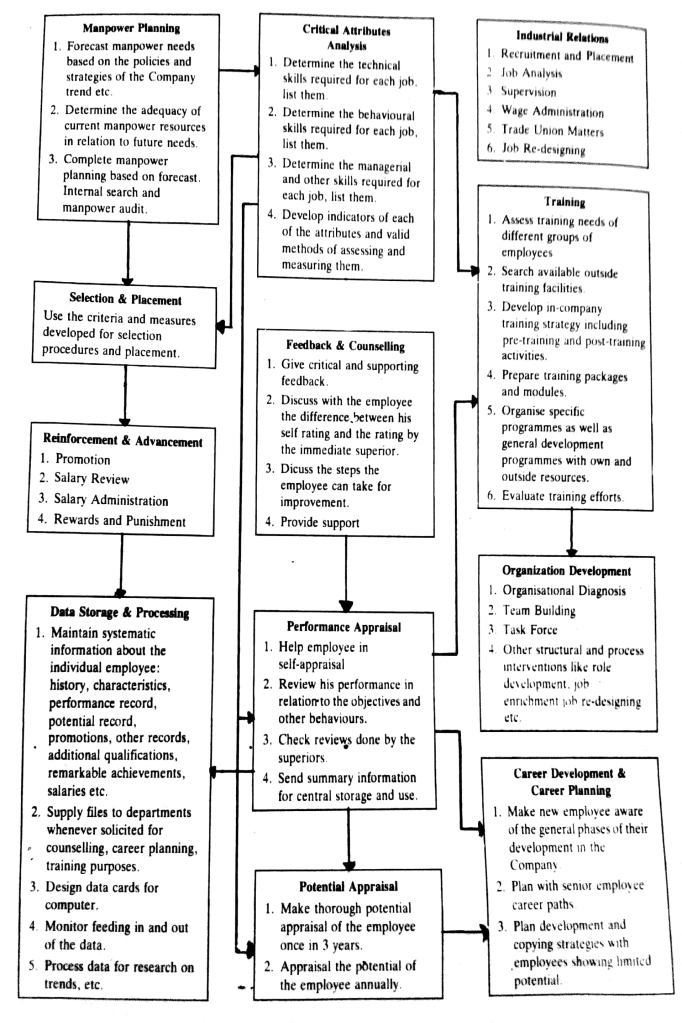

 Psychology Guide